
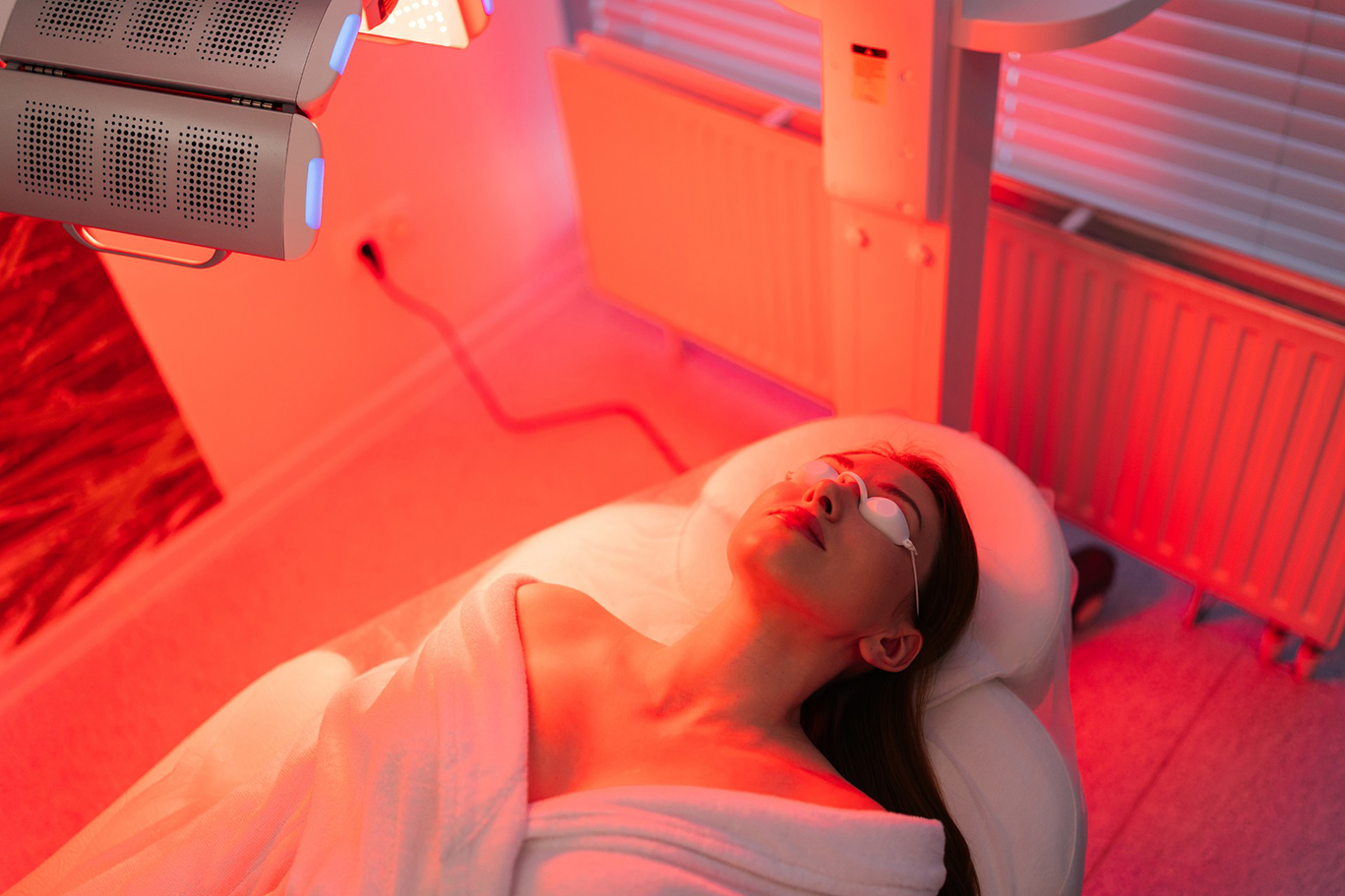
You may have seen the numerous ads and products that are capturing the attention of many health-minded customers and biohackers who are looking for the promises that red light therapy may unpack. However, it is important to understand that it isn’t intended to be a quick fix, but rather a tool to support some aspects of our health. In this article, we take a side-by-side look at red light therapy and Carbon 60 (C60) supplementation. Both get attention for skin, energy, recovery, and longevity, but they are not interchangeable.
This blog breaks down how it works, where the evidence stands, and what may be right for you, while noting that you should always discuss any therapy, devices, or dietary supplementation with your healthcare practitioner (HCP). You will see how light can nudge your cells, while a soccer-ball-shaped molecule might soak up free radicals, both with the goal to support your health.
In the 1960s, a Hungarian researcher utilized red light therapy and found that its application in a laboratory environment significantly enhanced hair growth in the mice he was studying. This discovery led to further exploration of the potential benefits of infrared light.1
Red light therapy (RLT), often referred to today as photobiomodulation (PBM), harnesses the biological effects of light to influence cellular activity. The early RLT studies of the 1960s helped pave the way for the modern field of PBM research.1
Through a method known as selective photothermolysis, light can be customized to utilize specific wavelengths aimed at targeting tissue and promoting change in that area. The potency of light increases with shorter wavelengths, whereas longer wavelengths can facilitate healing or promote cell growth, as well as the synthesis of various molecules, including collagen-producing proteins.2
We know that the warmth of the sun or even the infrared light that is emitted from a space heater can make us feel warm and well, just so good. Now imagine the ability that light can bring to our cells.
There are some complex things happening at the cellular level that directly impact the mitochondria when a person is receiving red light therapy. For example, red and near-infrared photons (approximately 600–1000 nm) are absorbed by cytochrome c oxidase (CCO)—the final enzyme in the electron transport chain.1 This interaction thereby enables red light to:1,2
The red-light therapy and the right wavelengths appear to help mitochondria make more ATP, the basic energy currency, and calm oxidative stress without shutting it down entirely. This may boost repair and reduce soreness, as well as support other areas of health.1,2
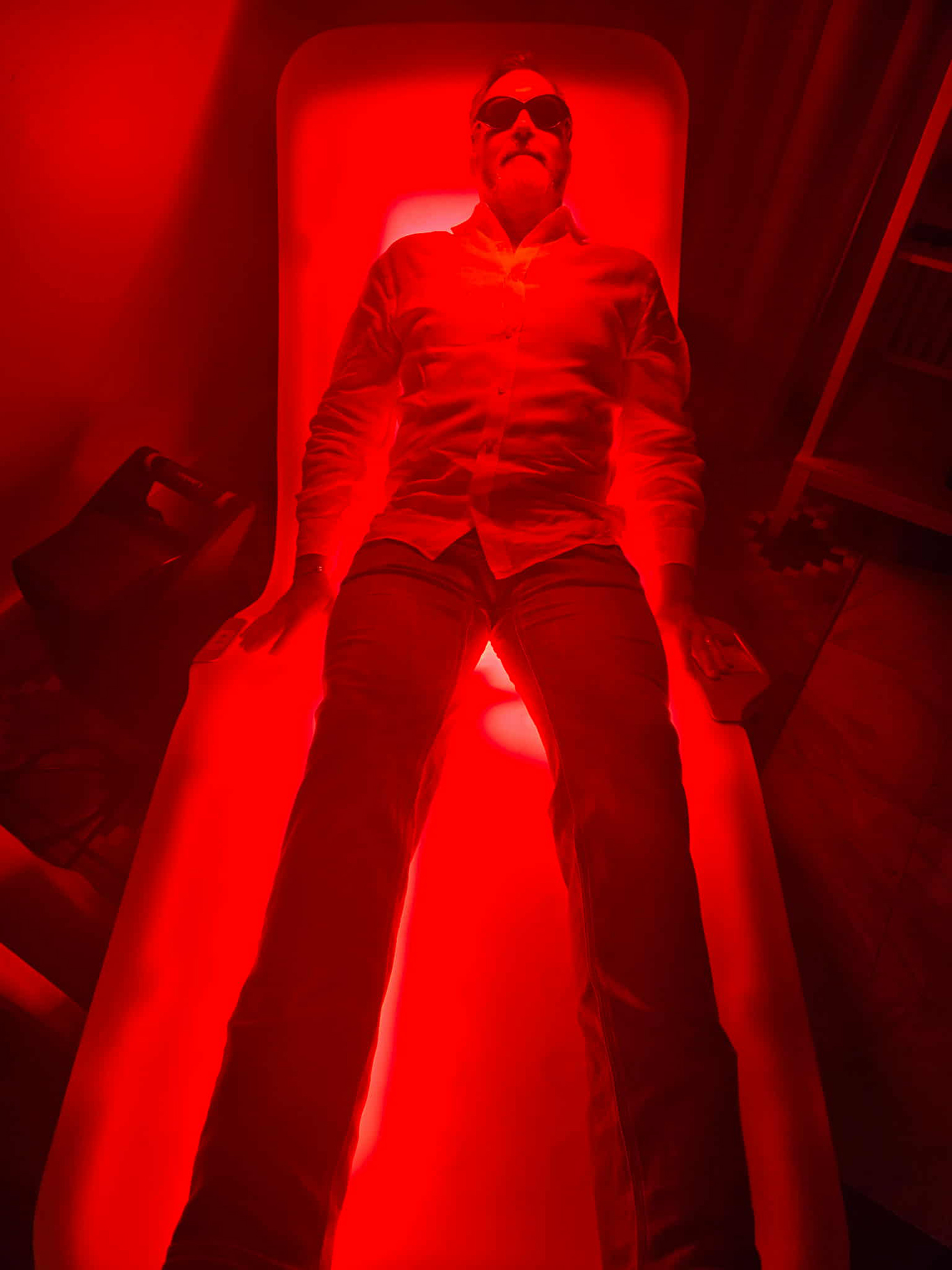
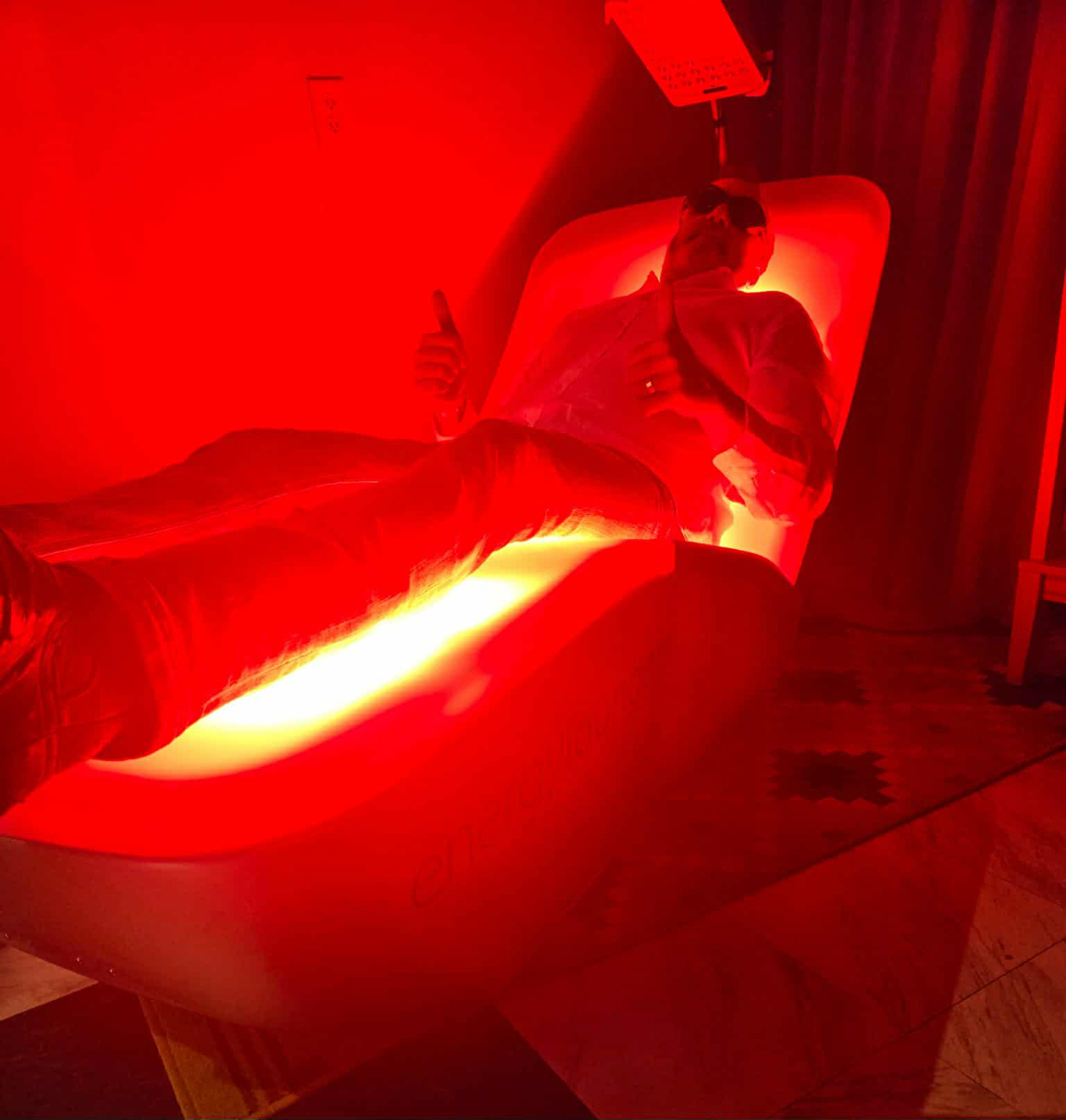
Our C60 Power team members are big believers in stacking their wellness routines. Here, our own Chas Herrin is using a Red-Light Lounger:
“I don’t mind stopping at this red light every morning.” – Chas
Red light therapy is generally safe when used correctly, though it is not a treatment for every condition. You can track your progress regarding hair growth, fine lines, joint comfort, or workout recovery, before, during, and after you start red light therapy. Choose devices that publish wavelength, irradiance, and treatment guidelines as recommended by your HCP. Keep sessions consistent for 6 to 8 weeks or as recommended by your health practitioner.3,4
If you are curious about C60, do your research and check the product for third-party testing, certificates of analysis, and details on solvents and purity. Discuss use with your healthcare practitioner before starting a dietary supplement, keep a diary, and share your supplement list with your HCP as well.
If you are looking to take the route of using both red light therapy and a Carbon 60 dietary supplement, including C60 in oil, avoid shining light directly on the oil or on skin right after applying it topically. Some fullerene forms can react to light.5 Keep a diary and also monitor your skin tolerance.
| Aspect | Red Light Therapy1-4 | Carbon 60 (C60) Buckminsterfullerene Supplements5 |
|---|---|---|
| What it is | Noninvasive light treatment that uses red and near-infrared wavelengths, usually 630 to 660 nm and 800 to 850 nm.¹,² | A carbon molecule shaped like a sphere (fullerene). Often dissolved in oils and taken orally, and acts as a sponge in absorbing excessive oxidative free radicals.³,⁵ |
| Core mechanism | Light is absorbed by mitochondrial enzymes, which can boost ATP production, modulate nitric oxide, and balance reactive oxygen species. This helps cellular repair.¹,² | Acts as a potent free-radical scavenger in lab settings. May fight oxidative stress by neutralizing reactive species. Effects vary with purity and formulation.³,⁵ |
| Key benefits claimed | Skin rejuvenation, faster muscle recovery, reduced joint pain, hair support, and improved oral tissues.1,2,4 | Antioxidant support, energy, recovery, and longevity.³,⁵,⁶ |
| Evidence quality | Backed by many human trials across different conditions. Best evidence for skin repair, oral mucositis, and certain pain conditions. | Supported by numerous preclinical (cell and animal) studies investigating its potent antioxidant properties. Human clinical data is limited.³,⁵,⁶ |
| Safety profile | Generally well tolerated when dosed correctly. Possible temporary redness, dryness, or headache. Avoid direct eye exposure unless eye wear is used. | Safety depends on purity and formulation. Some fullerene forms can be photoreactive. |
Red light therapy and C60 supplementation offer two distinct, yet complementary, approaches to supporting cellular health.
While they operate differently, their goals are aligned: promoting a healthier, more resilient cellular environment. Whether you choose one approach or explore using them together, it is essential to prioritize quality, such as using a pure, organic, and well-vetted C60 supplement.
As with any new wellness strategy, start slowly, be mindful of changes, reactions, and how you are feeling, along with sharing your plan first and then your findings with your healthcare practitioner.
Disclaimer
*These statements have not been evaluated by the Food and Drug Administration. These products are not intended to diagnose, treat, cure, mitigate, or prevent any disease. Individual results may vary.

Ken Swartz, MS is the co-founder, Chairman Emeritus, and former Chief Science Officer at
C60 Power, a health and wellness company committed to delivering the highest quality Carbon 60 products available.
Ken earned a Master of Science degree from the University of Colorado at Denver and a Bachelor of Science in
Economics from Arizona State University.’
References